Privacy Policy | Web Accessibility | TETER ©2026 All Rights Reserved
Privacy Policy | Web Accessibility
TETER ©2026 All Rights Reserved
Year Completed 2025
Location
Bakersfield, CA
Market Sector
K-12 Education
A+E Integration
Architectural Design
Mechanical Engineering
Electrical Engineering
Plumbing Engineering
Structural Engineering
Construction Administration
Mountain View TK–8 School was developed to serve a rapidly growing area of southwest Bakersfield, where new families created an urgent need for educational facilities that could grow alongside the community.
Designed for students from transitional kindergarten through eighth grade, the campus supports continuity, connection, and long-term enrollment needs while reflecting the Panama-Buena Vista Union School District’s commitment to excellence in education.
From the beginning, TETER worked in close partnership with the District to align educational goals, community values, budget parameters, and schedule requirements. The result is a welcoming, flexible TK–8 campus designed to support students, families, and educators for generations.
More than a response to growth, the campus was conceived as a unifying place, one that brings students, families, and educators together in a shared environment that feels both intentional and welcoming. The TK–8 model allows students to remain rooted in a single school community as they progress, strengthening relationships and fostering a sense of belonging over time.
Through thoughtful campus organization and a clear focus on connection, Mountain View TK–8 was designed to become a lasting neighborhood anchor that reflects the District’s vision for strong schools at the heart of strong communities.

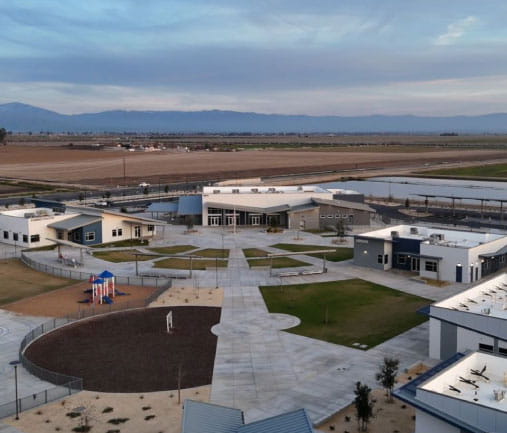
Developed through close collaboration with District leadership, the campus layout centers on a shared student plaza, intentionally connecting grade‑level learning areas, outdoor spaces, and daily student life into one unified TK–8 community.
Collaboration shaped the project from its earliest stages. District leadership, school administrators, and TETER’s architecture and engineering teams worked together to define a clear vision for how the campus should function day-to-day and evolve over time.
Listening to the District’s priorities, including dual language immersion, outdoor learning, operational simplicity, and long-term durability, allowed the design team to translate educational philosophy into physical space.
Throughout the process, design decisions were informed not only by educational goals, but by how the campus would be used, maintained, and experienced over time. Working closely with District staff across departments helped ensure the campus would remain functional, welcoming, and adaptable as enrollment grows and programs evolve, reinforcing the idea that strong schools are built through long-term partnerships, not one-time projects.
“The core vision was to create a flexible indoor-outdoor learning environment where architecture, landscape, and curriculum work together, while blending naturally into the surrounding Bakersfield landscape.”
— Jamie Miller, Principal Architect, TETER
Structural and architectural systems were developed together to achieve both performance and visual clarity. The steel canopy structure at the main entry is supported by slender columns and cantilevered framing, creating a welcoming threshold while reducing the perceived scale of the building. Angled curtainwall glazing and sculpted wall planes were shaped in close coordination with the structural framework to preserve design intent and daylight access.
Concealed brace frames and carefully aligned finishes allowed the architecture to remain clean and uninterrupted, even where framing responded to slope transitions and varied roof heights. These solutions supported constructability while reinforcing the simplicity and precision of the overall design.
Outdoor learning environments are central to the campus experience. Edible teaching gardens were intentionally placed at the heart of the site, reinforcing hands-on learning and environmental stewardship as part of everyday instruction.
These spaces extend learning beyond classroom walls and support inquiry-based education, while also helping define transitions between grade groups as the landscape matures.
Beyond curriculum integration, outdoor learning environments provide flexibility in how and where students learn. Access to outdoor spaces supports movement, collaboration, and varied learning settings, benefits that are especially important for younger learners and for maintaining engagement throughout the TK–8 continuum. Shaded gathering areas and outdoor classrooms offer comfortable, inviting settings that encourage social interaction, creativity, and connection to the broader campus.
Together, these spaces help foster a healthy, engaging learning environment that supports student well‑being while strengthening the school’s connection to families and the surrounding community.
“When I walk through the campus, what feels most meaningful to me is seeing how intentionally every space was designed with students in mind. You can feel that this school was built not just as a building, but as a place where learning truly comes to life.”
— Erica Rojas, Principal, Mountain View TK-8 School
Early and continuous integration between architecture and engineering was essential to delivering the campus within a tight schedule and budget. A hybrid approach combining modular classroom buildings with site built structures allowed construction of the approximately 101,000 square foot campus to proceed efficiently while maintaining design consistency. Early collaboration with structural engineering helped refine framing and layout decisions, simplifying construction while preserving the overall architectural vision.
Engineering coordination focused on long‑term performance and ease of maintenance for the District. Mechanical, electrical, and structural systems were selected to align with district standards and staff familiarity, reducing operational complexity. Infrastructure was planned to support phased construction and future growth, with critical underground systems installed early to avoid disruption in later increments.
Energy‑conscious strategies, including solar carports and battery energy storage, support campus resilience while also providing shaded outdoor areas that respond to Bakersfield’s climate.

Early collaboration between architecture and engineering shaped campus structures at every scale, allowing exterior framing, interior systems, and phased construction solutions to work together while preserving design intent and long‑term functionality for the District.
Throughout construction, TETER’s integrated A+E team and in-house construction administration allowed for quick coordination, responsive problem-solving, and smooth collaboration with the contractor and utilities. This approach minimized changes, controlled costs, and supported the successful opening of the campus for the 2025–26 school year.
More than a new school, Mountain View TK–8 represents an investment in southwest Bakersfield, one that strengthens neighborhood identity, supports families, and creates a place where students can learn, grow, and remain connected throughout their educational journey.
Case Study
Year Completed
2025
Location
Bakersfield, CA
Market Sector
K-12 Education
A+E Integration
Architectural Design
Mechanical Engineering
Electrical Engineering
Plumbing Engineering
Structural Engineering
Construction Administration
Panama-Buena Vista
Union School District
Mountain View TK–8 School was developed to serve a rapidly growing area of southwest Bakersfield, where new families created an urgent need for educational facilities that could grow alongside the community.
Designed for students from transitional kindergarten through eighth grade, the campus supports continuity, connection, and long-term enrollment needs while reflecting the Panama-Buena Vista Union School District’s commitment to excellence in education.
From the beginning, TETER worked in close partnership with the District to align educational goals, community values, budget parameters, and schedule requirements. The result is a welcoming, flexible TK–8 campus designed to support students, families, and educators for generations.
More than a response to growth, the campus was conceived as a unifying place, one that brings students, families, and educators together in a shared environment that feels both intentional and welcoming. The TK–8 model allows students to remain rooted in a single school community as they progress, strengthening relationships and fostering a sense of belonging over time.
Through thoughtful campus organization and a clear focus on connection, Mountain View TK–8 was designed to become a lasting neighborhood anchor that reflects the District’s vision for strong schools at the heart of strong communities.
Collaboration shaped the project from its earliest stages. District leadership, school administrators, and TETER’s architecture and engineering teams worked together to define a clear vision for how the campus should function day-to-day and evolve over time.
Listening to the District’s priorities, including dual language immersion, outdoor learning, operational simplicity, and long-term durability, allowed the design team to translate educational philosophy into physical space.
Throughout the process, design decisions were informed not only by educational goals, but by how the campus would be used, maintained, and experienced over time. Working closely with District staff across departments helped ensure the campus would remain functional, welcoming, and adaptable as enrollment grows and programs evolve, reinforcing the idea that strong schools are built through long-term partnerships, not one-time projects.
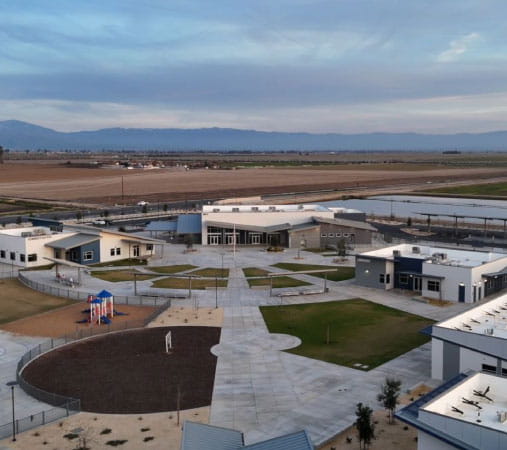
“The core vision was to create a flexible indoor-outdoor learning environment where architecture, landscape, and curriculum work together, while blending naturally into the surrounding Bakersfield landscape.”
— Jamie Miller, Principal Architect, TETER
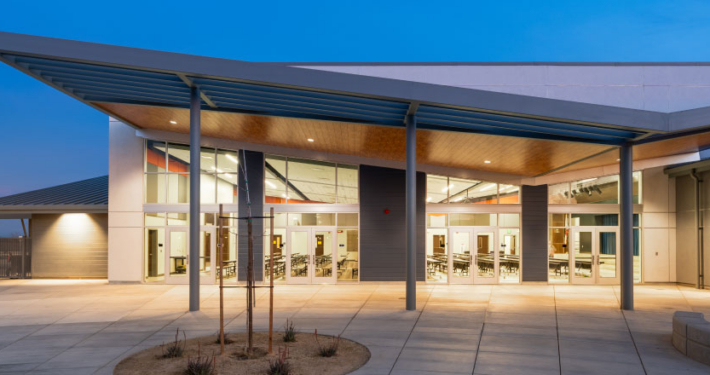
Structural and architectural systems were developed together to achieve both performance and visual clarity. The steel canopy structure at the main entry is supported by slender columns and cantilevered framing, creating a welcoming threshold while reducing the perceived scale of the building. Angled curtainwall glazing and sculpted wall planes were shaped in close coordination with the structural framework to preserve design intent and daylight access.
Concealed brace frames and carefully aligned finishes allowed the architecture to remain clean and uninterrupted, even where framing responded to slope transitions and varied roof heights. These solutions supported constructability while reinforcing the simplicity and precision of the overall design.
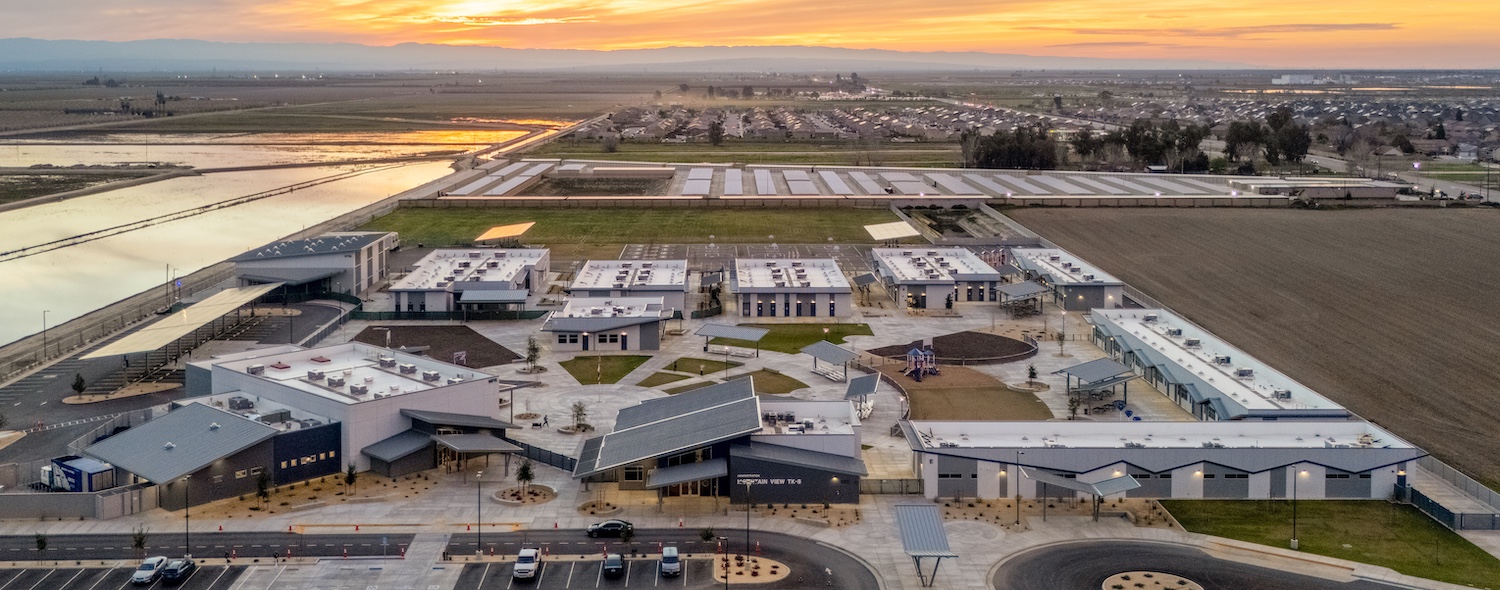
Outdoor learning environments are central to the campus experience. Edible teaching gardens were intentionally placed at the heart of the site, reinforcing hands-on learning and environmental stewardship as part of everyday instruction.
These spaces extend learning beyond classroom walls and support inquiry-based education, while also helping define transitions between grade groups as the landscape matures.
Beyond curriculum integration, outdoor learning environments provide flexibility in how and where students learn. Access to outdoor spaces supports movement, collaboration, and varied learning settings, benefits that are especially important for younger learners and for maintaining engagement throughout the TK–8 continuum. Shaded gathering areas and outdoor classrooms offer comfortable, inviting settings that encourage social interaction, creativity, and connection to the broader campus.
Together, these spaces help foster a healthy, engaging learning environment that supports student well‑being while strengthening the school’s connection to families and the surrounding community.
“When I walk through the campus, what feels most meaningful to me is seeing how intentionally every space was designed with students in mind. You can feel that this school was built not just as a building, but as a place where learning truly comes to life.”
— Erica Rojas, Principal, Mountain View TK-8 School
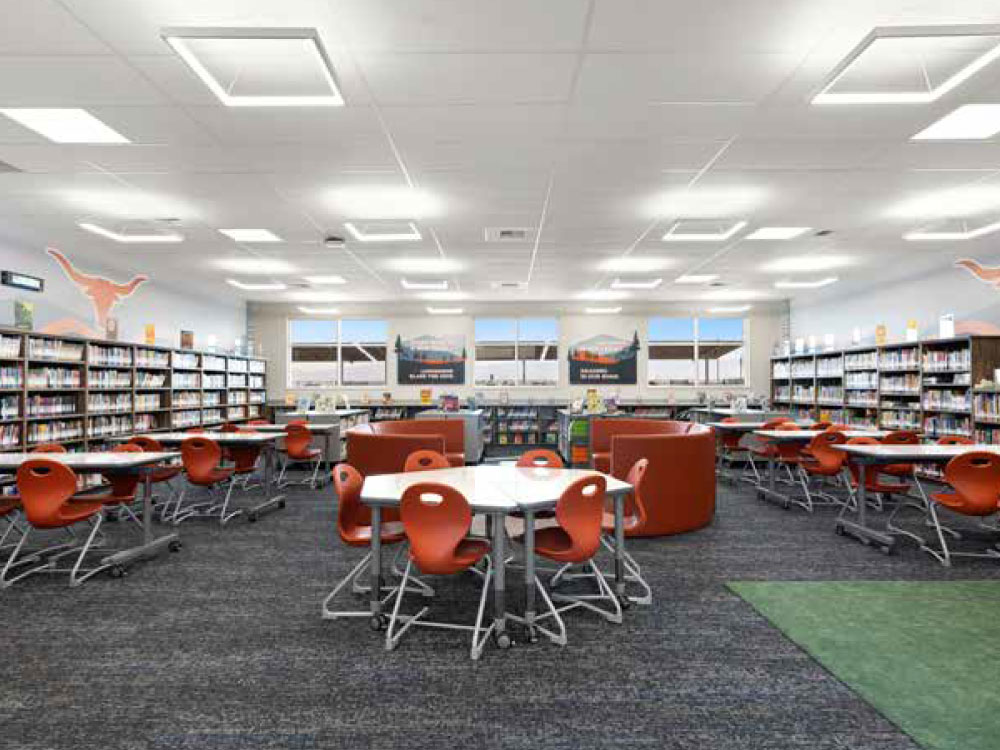
Early and continuous integration between architecture and engineering was essential to delivering the campus within a tight schedule and budget. A hybrid approach combining modular classroom buildings with site built structures allowed construction of the approximately 101,000 square foot campus to proceed efficiently while maintaining design consistency. Early collaboration with structural engineering helped refine framing and layout decisions, simplifying construction while preserving the overall architectural vision.
Engineering coordination focused on long‑term performance and ease of maintenance for the District. Mechanical, electrical, and structural systems were selected to align with district standards and staff familiarity, reducing operational complexity. Infrastructure was planned to support phased construction and future growth, with critical underground systems installed early to avoid disruption in later increments.
Energy‑conscious strategies, including solar carports and battery energy storage, support campus resilience while also providing shaded outdoor areas that respond to Bakersfield’s climate.
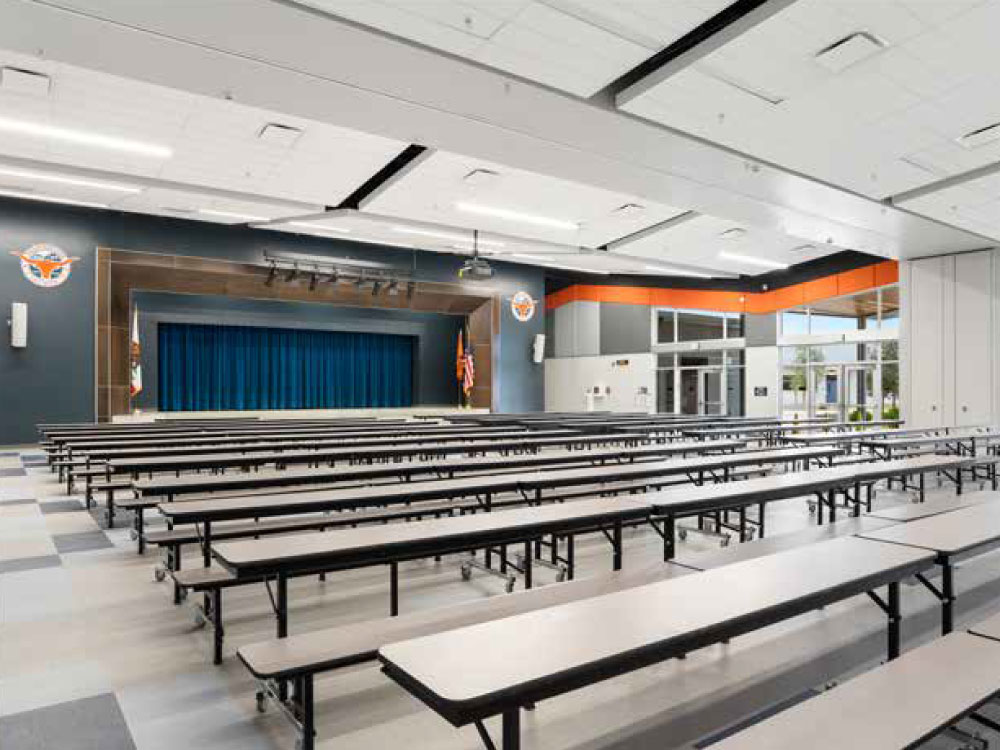
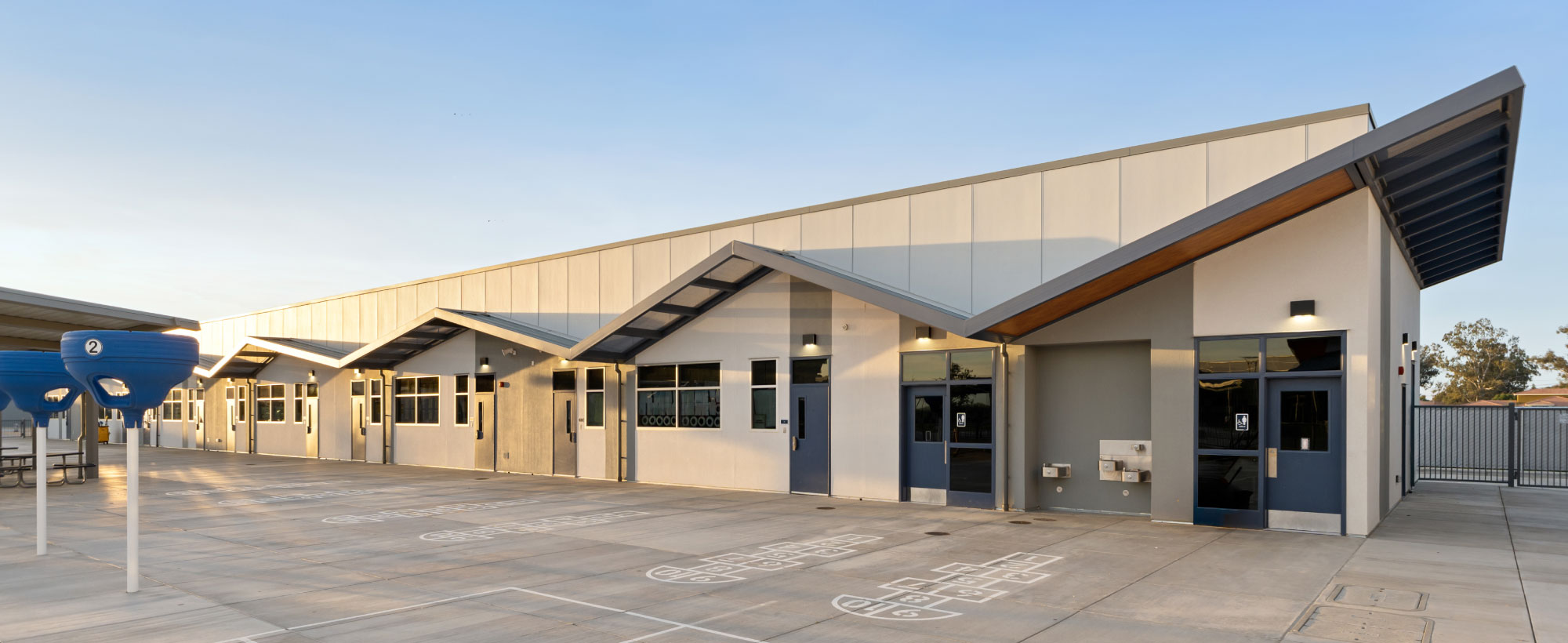
Early collaboration between architecture and engineering shaped campus structures at every scale, allowing exterior framing, interior systems, and phased construction solutions to work together while preserving design intent and long‑term functionality for the District.
Throughout construction, TETER’s integrated A+E team and in-house construction administration allowed for quick coordination, responsive problem-solving, and smooth collaboration with the contractor and utilities. This approach minimized changes, controlled costs, and supported the successful opening of the campus for the 2025–26 school year.
More than a new school, Mountain View TK–8 represents an investment in southwest Bakersfield, one that strengthens neighborhood identity, supports families, and creates a place where students can learn, grow, and remain connected throughout their educational journey.